Access federal services, visa information, Medicare, Centrelink, and other national support resources in one place.
We collaborate with local and national organizations to deliver practical support for our community. Use the info badge or focus a logo to see how each partner can help.

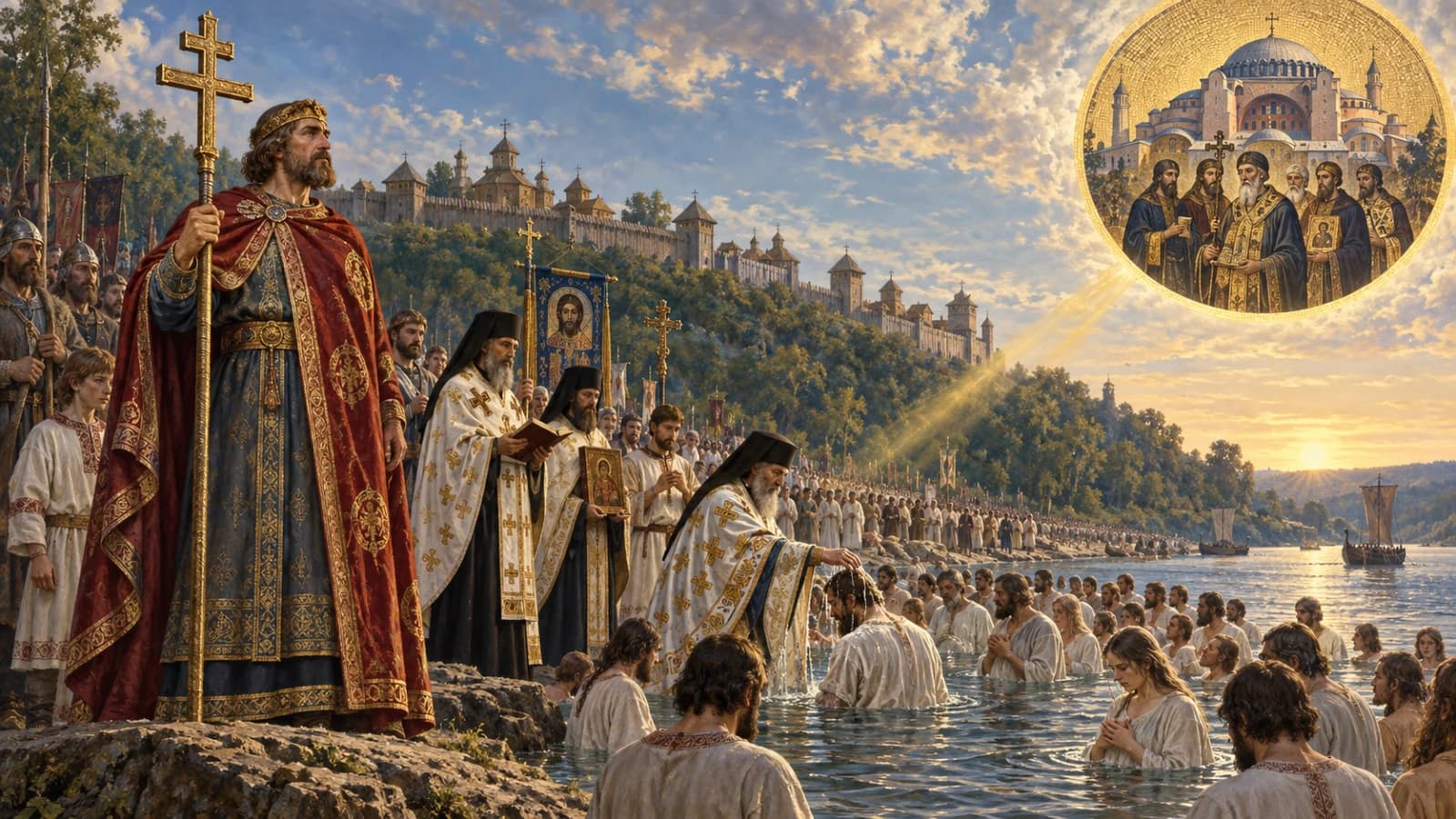
Constantinople baptised Rus, founded the Kyiv Metropolis, withdrew Moscow's limited permission and granted autocephaly—the ecclesiastical case without political slogans.
For a non-churchgoing reader, the answer appears simple: independent Ukraine has its own local Orthodox Church of Ukraine. For an Orthodox Christian, however, that is not enough. The Church is concerned not only with state borders or national aspirations but with apostolic succession, Eucharistic communion and a canonical decision by the competent ecclesiastical authority.
The title's claim needs one precise distinction. It does not mean that every Christian outside the OCU is non-Orthodox or that every sacrament celebrated outside it is automatically invalid. It means that, in Orthodox canonical order, Ukraine cannot have two rival local Churches claiming the same territory. The question is which body is the canonical autocephalous Eastern Orthodox Church for Ukraine. The answer presented here is the OCU.
This is the gap in the public discussion. Ukrainians saw extensive coverage of the ceremonial presentation of the Tomos, the president beside the Ecumenical Patriarch and political slogans. They heard far less about the ecclesiastical sequence: the Baptism of Rus from Constantinople → the Kyiv Metropolis within the Ecumenical Patriarchate → Moscow's limited permission of 1686 → its revocation in 2018 → the restoration of hierarchs → the Unification Council → the Tomos.
The central point: the OCU is not canonical because the Ukrainian state said so. It is the canonical local Church of Ukraine because the Mother Church of the Kyiv Metropolis—the Ecumenical Patriarchate—resumed its canonical responsibility, heard appeals, brought Orthodox Ukrainians together in council and granted the new Church autocephaly by Tomos.
Under Saint Volodymyr the Great, Kyivan Rus received baptism in the Byzantine Orthodox tradition. Bishops, liturgical culture, church order and the canonical bond came to Kyiv from the Church of Constantinople.
In his message for the 1,025th anniversary of the Baptism of Rus, the Ecumenical Patriarch describes Constantinople as the Mother Church that cared for Kyiv's ecclesiastical life through missionaries and hierarchs until the seventeenth century. A 2018 synodal communiqué states directly that the Ukrainian Orthodox people received the saving Christian faith and holy baptism from Constantinople.
This is fundamental. Moscow did not exist in 988, and a distinct Moscow ecclesiastical see arose much later. The original centre of this church tradition was Kyiv, and its Mother Church was Constantinople, not Moscow.
Moscow's account speaks of a “transfer of the Kyiv Metropolis.” Constantinople reads its own 1686 documents differently: the Patriarch of Moscow was granted, by oikonomia—an exceptional accommodation for practical circumstances—the right to ordain the Metropolitan of Kyiv.
That right had explicit conditions:
In Constantinople's position, therefore, jurisdiction over Kyiv was not permanently ceded to Moscow. Moscow was delegated a particular act while Kyiv's bond with its Mother Church remained. The conditions later ceased to be observed, and the Kyiv Metropolis was effectively absorbed into the Russian Church.
This interpretation was not invented in 2018. It appeared in the 1924 Tomos for the Orthodox Church of Poland, which described Kyiv's annexation to Moscow as contrary to binding canonical regulations. Patriarch Bartholomew repeated the position in July 2018.
In ecclesiastical language, Mother Church is not an emotional compliment. It is the historic Church from which another ecclesial community received its bishops, order and canonical birth. For Kyiv, that Mother is Constantinople.
A good mother does not keep an adult child permanently dependent. Throughout Orthodox history, Constantinople granted autocephaly to Churches that matured into self-government—including the Church of Moscow. In Ukraine's case, it recognised that the historic Kyiv Metropolis, within an independent country, should receive a local ecclesiastical order: elect its own primate, govern its internal life and take responsibility for its flock.
The image of a “stepmother” is appropriate only as a metaphor for conduct, not as a name for a Church or an insult to its faithful. Moscow received a limited right to assist by ordaining Kyiv's metropolitan, but gradually acted as if Kyiv and its entire ecclesiastical inheritance belonged to Moscow. It abolished the metropolis's distinct rights, appropriated its history, transferred the name “Rus” to the Muscovite centre and, when the Mother Church restored Ukrainian autocephaly, refused to accept it.
The difference can be stated simply:
This metaphor must not become an excuse for hatred. The Moscow Patriarchate and the UOC include sincere Christians, and human dignity does not depend on jurisdiction. It does, however, reveal the difference between Constantinople's maternal action—from the Baptism of Rus to the Tomos—and an imperial model in which Kyiv is valued only while it remains subordinate to Moscow.
The official decision of the Holy and Sacred Synod on 11 October did five things:
This was the decisive canonical turning point. Until then, the Moscow Patriarchate could insist that Ukrainian hierarchs outside its structure were schismatics without recognised orders. Having heard their appeals, Constantinople—on the basis of its understanding of its appellate prerogatives, including Canons 9 and 17 of the Fourth Ecumenical Council—restored them to canonical status.
They therefore came to the Unification Council as hierarchs whose canonical status had been restored by the first see of the Orthodox world. Moscow rejected that decision, but Moscow's disagreement does not make Constantinople's decision nonexistent.
The OCU's standing rests not on a political act but on a sequence of church actions:
The answer to “who made the OCU canonical?” is therefore: not a president or parliament, but the Ecumenical Patriarchate's Synod, the Unification Council and the Patriarchal and Synodal Tomos.
Orthodoxy has no single administrative centre equivalent to the papacy. Reception of a new autocephaly may take years, while other local Churches agree, delay or object.
Incomplete recognition is not the same as absence of canonical status. Several local Churches have entered into communion with the OCU; others have not added its primate to their diptychs. This demonstrates an inter-Orthodox dispute, not that the OCU is merely a civic organisation or invention of state power.
Nor does that dispute create two canonical local Churches for the same country. Moscow may continue to recognise the UOC as its canonical structure, but the Tomos identifies the OCU as the autocephalous local Church whose canonical territory is Ukraine. That is the specific sense in which this article calls the OCU Ukraine's one canonical Eastern Orthodox Church.
The Moscow Patriarchate rejected Constantinople's decisions and broke Eucharistic communion with it on 15 October 2018. This is a serious wound in world Orthodoxy, but it does not annul the issued Tomos.
One must distinguish the faithful from the jurisdictional structure. Millions of UOC believers, priests and monastics do not become enemies or “non-Orthodox” because of the name of their parish. The question concerns the canonical allegiance of the structure operating in Ukraine.
Before 2018, the UOC was a self-governing part of the Moscow Patriarchate with broad autonomy. Following Russia's full-scale invasion, its Council of 27 May 2022 declared “full autonomy and independence” and amended its statute. This was important distancing from Patriarch Kirill's position, but it did not resolve the canonical contradiction.
Only two internally consistent possibilities exist:
This is the trap of its current status: remaining with Moscow preserves a foreign jurisdiction within the autocephalous Church of Ukraine; leaving Moscow unilaterally does not automatically confer canonical autocephaly.
There is a path already opened by the 2018 decisions: not another parallel “independent” structure, but conciliar unity within the canonical local OCU, while protecting the dignity, pastoral responsibility and lawful rights of communities.
The Ukrainian state provided diplomatic and organisational support. President Petro Poroshenko made autocephaly a central political subject and stood beside the Ecumenical Patriarch when the Tomos was presented. The television image obscured the ecclesiastical substance.
But a politician's presence at a church event does not turn a synodal decision into a presidential decree. State support accompanied the process; church bodies performed the canonical acts.
The essential date is not only 6 January 2019, but 11 October 2018. On that day Constantinople resumed its canonical responsibility for Kyiv, withdrew the permission of 1686, restored Ukrainian hierarchs and faithful to communion, and opened the canonical road to one autocephalous Church.
The OCU need not be justified only by the national argument that Ukrainians want their own Church. The ecclesiastical answer is deeper.
The OCU is Orthodox because it preserves Orthodox doctrine, worship and sacraments. It is canonical because the Ecumenical Patriarchate received its hierarchy into communion, blessed its Council and proclaimed its autocephaly. It is Ukrainian because its canonical territory encompasses independent Ukraine and its see is in historic Kyiv.
Its history did not begin on a political stage in 2019. It reaches back to Saint Volodymyr, the Baptism of Rus and the moment when Kyiv received the Orthodox faith from Constantinople.
More stories
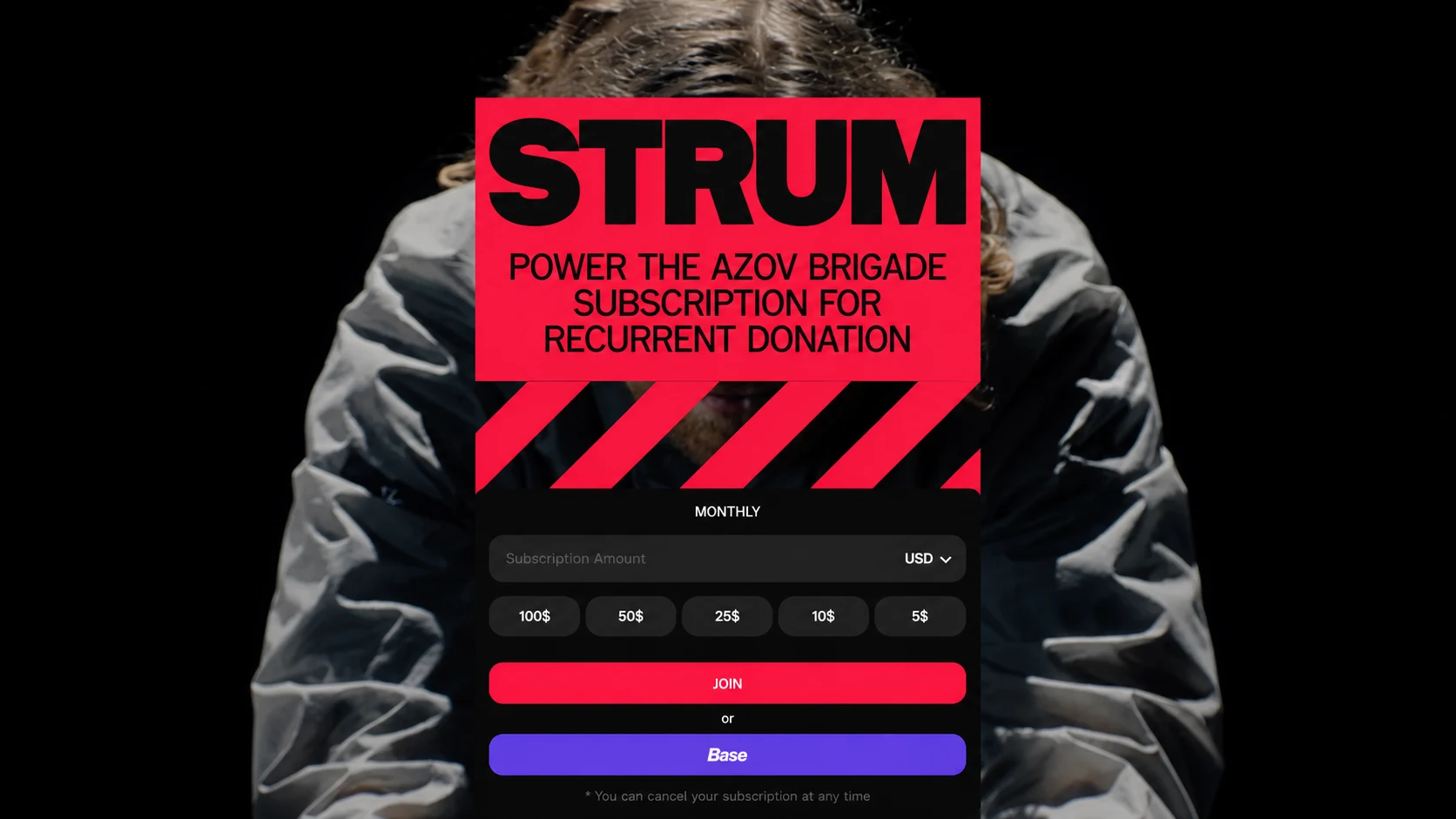
Why monthly donations help military units plan ahead, how a STRUM subscription works, and why responsible support for Ukraine must continue every day.
Read story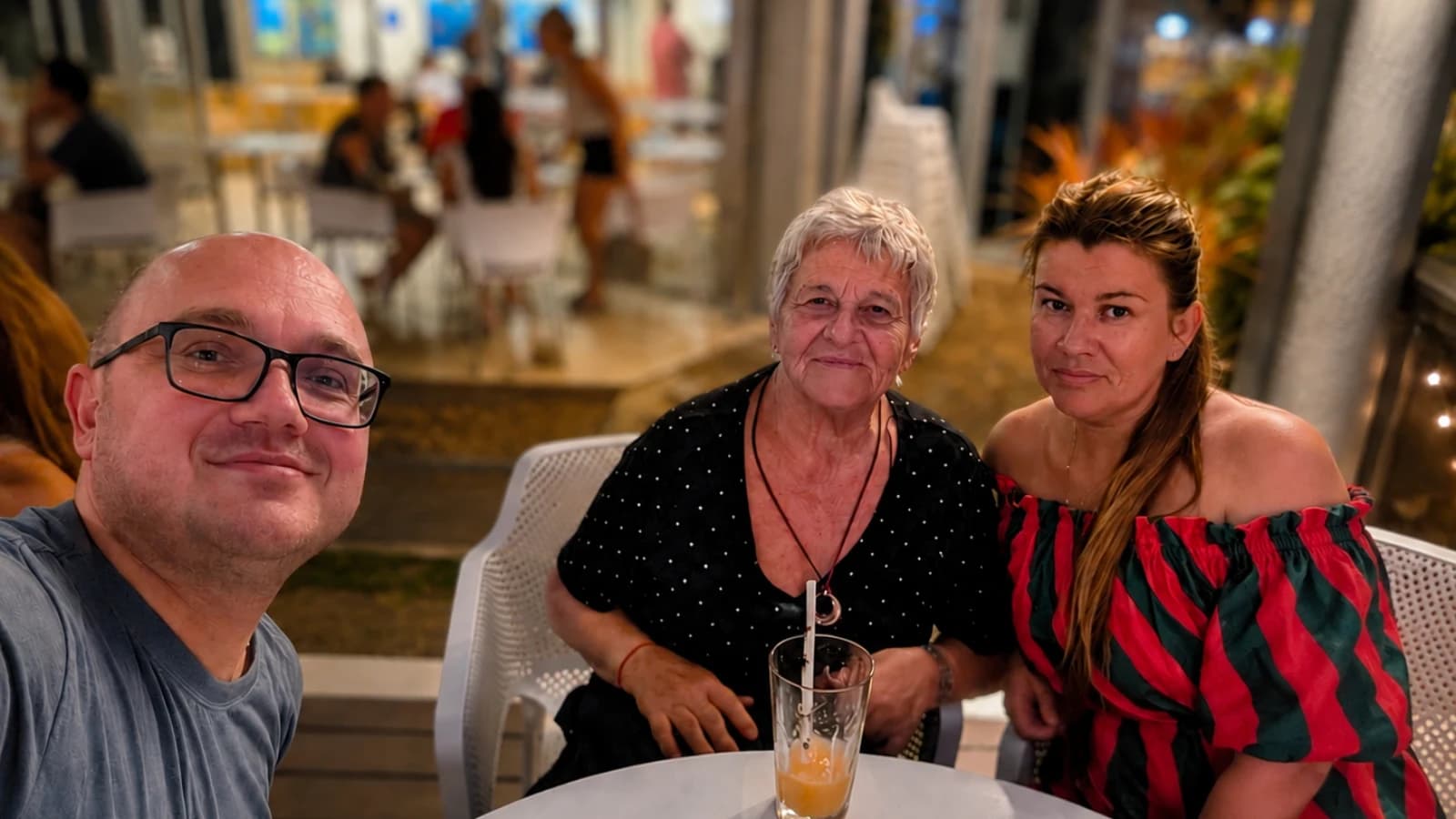
How virtual phone numbers can help people stay connected across countries, including a Ukrainian mobile number used from Australia.
Read story
A practical, lower-risk starting point for Ukrainians in Australia who need current official health-support information.
Read story
A practical starting point for Ukrainians in Darwin who want current CDU fee, scholarship, and admissions information.
Read story
A simple overview of where to start if you need housing-cost support and want the current official Services Australia rules.
Read story
A safer starting point for Ukrainians in Australia who need current official visa information and trusted referral options.
Read storySupport UAANT
Every contribution — no matter the size — helps us welcome newcomers, support families, preserve our heritage, and keep the Ukrainian flame burning bright in the Northern Territory.
Direct bank transfer via PayID: uaant.inc@gmail.com · zero fees